Mechanical
Confirm datums, loads, envelopes, transfers, guarding and service access around production identification using cable and wire identification labels.
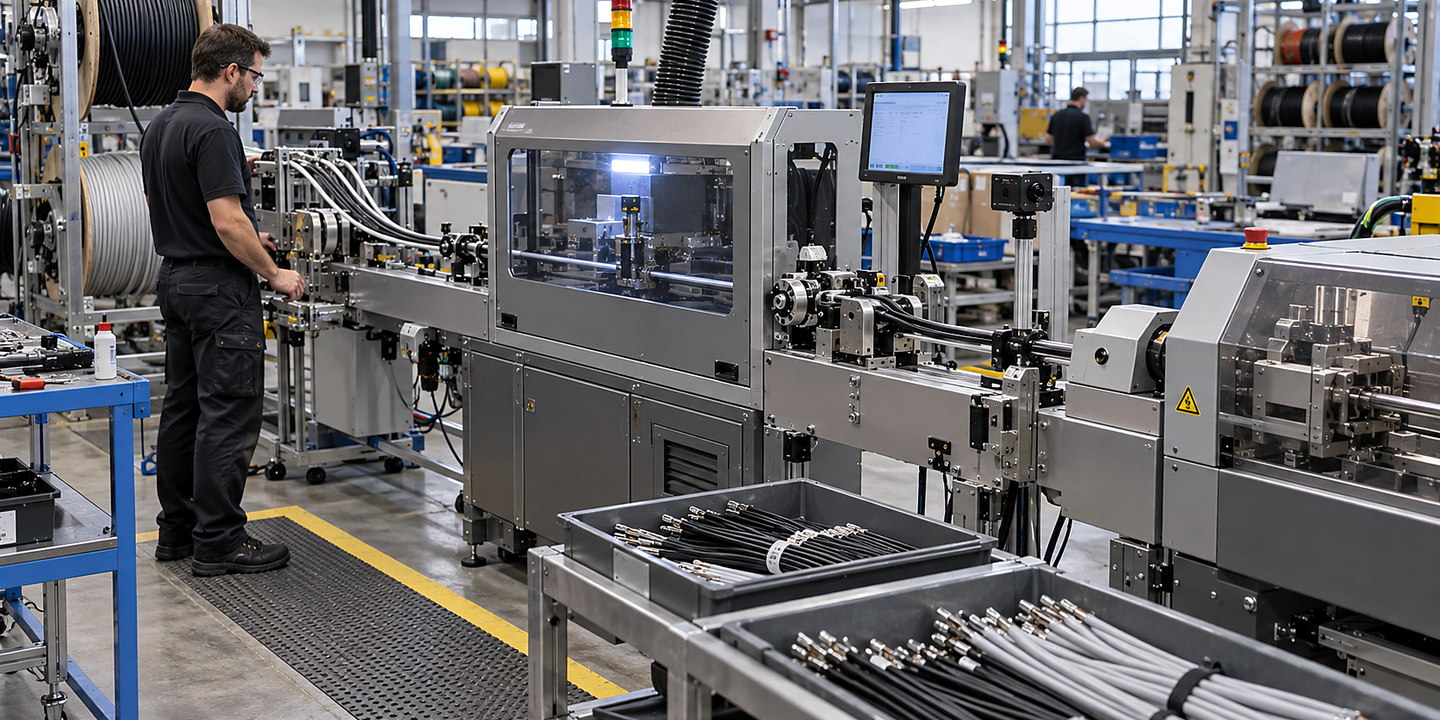
Plan mechanical, electrical, control, data, safety and operator interfaces for cable label printing.
Successful cable label printing must work with your existing line, people, production data and safeguards—not as an isolated machine.
For data integration and exception handling for cable and wire identification labels, define every physical connection, signal, responsibility, check and fallback before installation.
Plan cable label printing around your identifiers, substrates, production events, system interfaces, exceptions and verification records. Discuss a practical data-flow approach with Oxford Traceability. Your integration review should connect production speed and read-point conditions, line, business-system and network interfaces and the people who run the process.
Discuss your application

Confirm datums, loads, envelopes, transfers, guarding and service access around production identification using cable and wire identification labels.
For Cable Label Printing, list the supplies, isolation, protective devices, panels and cable routes required by the proposed installation.
Agree operating modes, line handshakes, permissives, faults, recovery and recipes affected by exception, rework and duplicate handling.
Review risk controls, stop behaviour, access, reset and the checks needed around line, business-system and network interfaces.
Define identifiers, timestamps, results, retention and recovery needs for verification, retention and reconciliation evidence.
Plan normal operation, replenishment, clearance, cleaning, maintenance and training for data integration and exception handling for cable and wire identification labels.
For Cable Label Printing, your team can review each stage before the complete installation is put into routine use.
Share real identifiers, substrates, production events and exception records, including the normal range for identifier and data rules for cable & wire identification labels and the difficult substrate, label or tag behaviour cases.
Compare suitable methods and use focused trials to show how each option performs against production speed and read-point conditions.
Connect the equipment to your line, services and controls while resolving line, business-system and network interfaces for day-to-day operation.
Confirm exception, rework and duplicate handling, then complete and record verification, retention and reconciliation evidence before your operating team takes over.
For your application: check production speed and read-point conditions, line, business-system and network interfaces, exception, rework and duplicate handling, and verification, retention and reconciliation evidence as part of the complete line trial.